

Influential Women Features Linda Akanbi, Ed.D.: Literacy Educator, Specialist And Founder Of ARS Educational Services
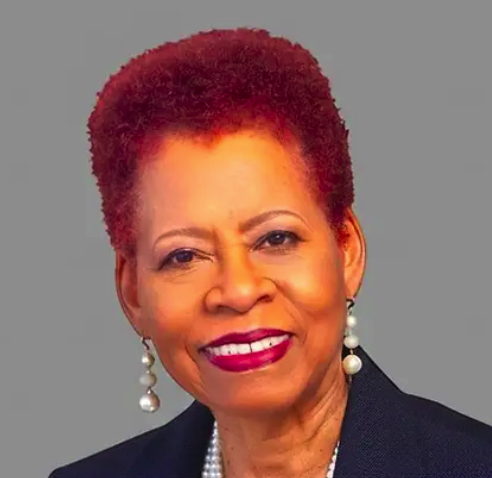
Linda Akanbi, Ed.D., is the Founder and Managing Member of ARS Educational Services LLC in Acworth, Georgia, where she provides reading consultation services, literacy assessments, and remedial instruction for parents, schools, and childcare centers. She is also Professor Emeritus of Reading Education at Kennesaw State University, where she built a distinguished career in teacher education, literacy leadership, and program development in elementary and early childhood education.
Across her professional journey, Dr. Akanbi has remained deeply committed to advancing equitable access to effective reading instruction and improving outcomes for diverse and multilingual learners. Her career reflects a lifelong dedication to helping children develop the literacy skills they need to reach their full potential, while supporting educators in understanding the individual needs of their students.
Dr. Akanbi’s passion for teaching began in childhood, when she frequently “played school” and was encouraged by her elementary teachers to support and tutor classmates. Those early experiences helped shape a lifelong dedication to education. She was influenced by exceptional teachers who went beyond academic expectations, as well as strong encouragement from her family, professors, and later her husband.
Motivated by a strong sense of intrinsic drive, Dr. Akanbi began her career as a remedial reading teacher after earning her Bachelor of Science Degree in elementary education. The experience quickly reinforced her interest in literacy and led her to pursue a Master’s Degree in reading education at the University at Buffalo, where she was already performing the work of a reading specialist.
While completing her graduate studies, she was encouraged by faculty mentors to pursue a doctorate. At the same time, she worked as a reading coordinator in a university learning center, where she designed reading courses and trained graduate assistants. Her career subsequently advanced into higher education leadership roles, including developing a master’s program in reading education, serving as department chair, and later directing a K–12 Reading Institute.
After retiring from her academic leadership role in 2008, Dr. Akanbi continued her work in literacy education by establishing Akanbi Reading Solutions and expanding her focus to international perspectives on reading instruction. She participated in global conferences and educational exchanges to better understand how literacy is taught across different linguistic and cultural contexts.
Today, she remains actively engaged in literacy advocacy, with a continued passion for supporting children, particularly in multilingual classrooms, while also evolving her professional interests. Her enduring commitment to helping children learn to read reflects a lifelong purpose that continues to guide her work and impact in education.
Dr. Akanbi attributes her success to being goal-driven and confident in her ability to succeed despite all the odds. She had intrinsic motivation—it wasn’t just what others expected of her or external incentives; it was something she wanted to do from within. She has always believed in persevering, that where there’s a will, there’s a way.
Her own doctoral journey became a powerful demonstration of that philosophy. While getting her doctorate, Dr. Akanbi went through three different dissertation advisors. The first one moved away, the second one passed away, and the third one wrote her saying that if she planned to move to Africa with her Nigerian husband, she should give up on getting her doctorate.
Dr. Akanbi did not accept that suggestion. At the time, she was pregnant, teaching full-time at Southern Illinois University, serving on about seven different campus committees, and raising a stepdaughter in kindergarten. Despite the demands on her time, she remained determined to complete what she had started.
She finished her dissertation and returned to defend it when her baby was just a few weeks old. She had not come that far and gone through blood, sweat, and tears just to give up.
Dr. Akanbi also recognizes the importance of the strong support system that surrounded her throughout her journey. She had people who believed in her and told her she was going to do great things. Her mother taught her that she was inferior to no one, that she was just as good as the next person, no matter who they were, and that she should never be afraid to challenge authority. Those lessons became an important part of the confidence and perseverance that have guided her career.
When Dr. Akanbi first started teaching school right out of college at age 21, she wanted to save the world. Her advisor offered a perspective that would remain with her: if she could make a difference in the life of one child, that would be enough. Of course, she did not stop there.
When she went to graduate school at the University at Buffalo, its motto was “let each individual become all that he is capable of becoming.” That philosophy became a foundation of her teaching approach.
Her teachers also taught her to find more than one way to teach anything because all children do not learn the same way, and to never give up on a child. Dr. Akanbi learned that if a child fails in one program, a teacher should not simply use the same materials and methods again. Instead, educators need to try something different, reach each child, discover what interests them, and meet them where they are.
Her first mentor, Dr. Edwards, shared a story that further demonstrated the influence a teacher can have. He had been a D student in high school until one day a teacher came by his desk and told him, “Bud, you know what? You write well.” That simple encouragement changed his entire life. He became a professor and traveled the world.
Years later, he returned to find that teacher and thank her. Instead of being happy, however, she was sad because she wondered how many other children she could have helped by simply saying a word of encouragement. For Dr. Akanbi, the story reinforced just how influential a teacher can be.
Dr. Akanbi believes young women entering the teaching field need to have a passion for teaching and for helping their learners succeed. She emphasizes the important role teachers play in children’s learning and believes educators must recognize their influence.
She encourages young women to get to know their students and take a personal interest in them as human beings. Educators should learn about students’ backgrounds while being slow to judge. They should observe and listen to their students and recognize that everything they need to know about teaching is not covered in education courses or in the halls of academe. For Dr. Akanbi, effective teaching requires a willingness to understand individual learners and continually adapt approaches to meet their needs.
Dr. Akanbi identifies several significant challenges facing education today, including teaching children to read when they come from different language and cultural backgrounds, cuts in federal funding for education programs, efforts by the government to control curriculum, and books being banned.
She believes there are political efforts afoot to miseducate children and sees the current political climate, including anti-DEI and anti-wokeness movements, as contributing to efforts to divide the country and move away from democracy.
At the same time, Dr. Akanbi sees meaningful opportunities in grassroots groups rising up, organizing, and ensuring that children learn the academics and skills they need to succeed in life and set high-achieving goals.
A recent experience at a jazz concert that served as a fundraiser for a scholarship program gave her particular hope. Videos of college students who had received scholarships showed them discussing ambitious goals, including conducting research, establishing nonprofits, encouraging other children, and taking their music further. Dr. Akanbi was amazed and impressed by their goals, and the experience reinforced her belief in the potential of young people. She believes efforts need to be afoot to ensure that children and youth are not miseducated because of political factions.
Honesty, integrity, respect, treating others as she wishes to be treated, fairness, justice, honor, responsibility, and perseverance are the values most important to Dr. Akanbi. These principles have guided her throughout both her career and personal life, helping her navigate challenges while remaining true to her mission of helping students reach their full potential. From her earliest experiences playing school as a child to her work as a remedial reading teacher, reading specialist, professor, department chair, program developer, and literacy consultant, she has remained focused on the transformative potential of education.
Through ARS Educational Services LLC and her continued commitment to literacy education, Dr. Linda Akanbi continues to bring that purpose to her work. Her career stands as a testament to the belief that perseverance matters, that teachers can change lives, and that every child deserves the opportunity to become all that they are capable of becoming.
Learn More about Dr. Linda Akanbi:
Through her Influential Women profile, https://influentialwomen.com/connect/Linda-Akanbi or through her website, https://akanbireadingsolutions.com/
Influential Women
Influential Women provides a platform where women from all backgrounds can connect, share their perspectives, and create content that empowers themselves and others. Through storytelling, thought leadership, and creative expression, Influential Women amplifies voices that inspire change.
Editorial Team
Influential Women
email us here
Legal Disclaimer:
EIN Presswire provides this news content "as is" without warranty of any kind. We do not accept any responsibility or liability for the accuracy, content, images, videos, licenses, completeness, legality, or reliability of the information contained in this article. If you have any complaints or copyright issues related to this article, kindly contact the author above.
